Star Breeding
Submitted by: White tea (@whitetriethylamine), credited together with the dev team · Multiblock Design Contest, September 2026
| Target tier | |
| Role | Multi-structure family — production and processing of living stars |
| Schematic | SBB.litematic, LFF.litematic, SHPLT.litematic, SFN.litematic, SWGA.litematic, DCS.litematic, MDRI.litematic |
| Original post | Star breeding |
Summary
A family of seven
Mechanics
The author's General_Information.txt describes a shared star lifecycle that all modules act on.
Lifecycle
- There are various types of star seeds. Any star seed in the base's input bus will be used.
- A star seed starts with 500 stability. Each rank up reduces the maximum attainable stability, but this is not a hard cap, so a star can keep a previous, higher stability value.
- Stability decays passively; higher rank stars decay faster.
- Feeders add initial mass, which is gradually digested into normal mass.
- Harvesters turn normal mass into byproducts.
- If both initial mass and normal mass are 0, the star is considered dead. Harvesters collect the cores of dead stars.
- If the base multiblock is unformed, or if the star is not dead by the time its stability reaches 0, everything in a spherical radius that reaches partway into the multiblocks is deleted.
Rank
- Stars cannot go down in rank.
- A star's density is based on its amount of normal mass, and its density decides its rank. Ranking up grants stability, but makes stability decay faster.
- A star can only rank up when its initial mass is 0.
- Passive stability decay depends on how close the density is to a certain value, which is decided by the rank.
Placeholder blocks
The schematics use stand-in blocks that the author intends to be replaced:
| Block in the schematic | Intended block |
|---|---|
| Nyanium Turbine Casing | the Mysterious Rod's blocks (from the official Dyson multiblock) |
| Unbendable Dragonsteel Casing | the Mysterious Obelisk's blocks (from the official Dyson multiblock) |
| Auxiliary Fusion Coil MK II | Auxiliary Fusion Coil MK IV |
| Advanced Fusion Coil | a higher tier of fusion coil |
| Draconic Stargate Ring Block | a new casing |
| Pallaridium | Neutronium |
| Nyanium Firebox Casing | a passthrough for the render |
| Nyanium Pipe Casing | a passthrough for the render inside the block |
| Lanterns | the color of the multiblock's render |
Stellar Breeding Base (SBB)
Summary
Creates a special space that efficiently traps and amplifies the energy of stars, then locks a star seed at its center where it can be processed.
Mechanics
- Any star seeds in the input bus will be used.
- The controller block does not control anything important. Instead, it links and unlinks the related multiblocks, and it controls the renders and the build-helper highlights.
- The base contains a block that accepts scripts. These scripts can activate, deactivate, or regulate the speed of the linked multiblocks.
- The base multiblock can reduce the star's stability by itself.
Structure
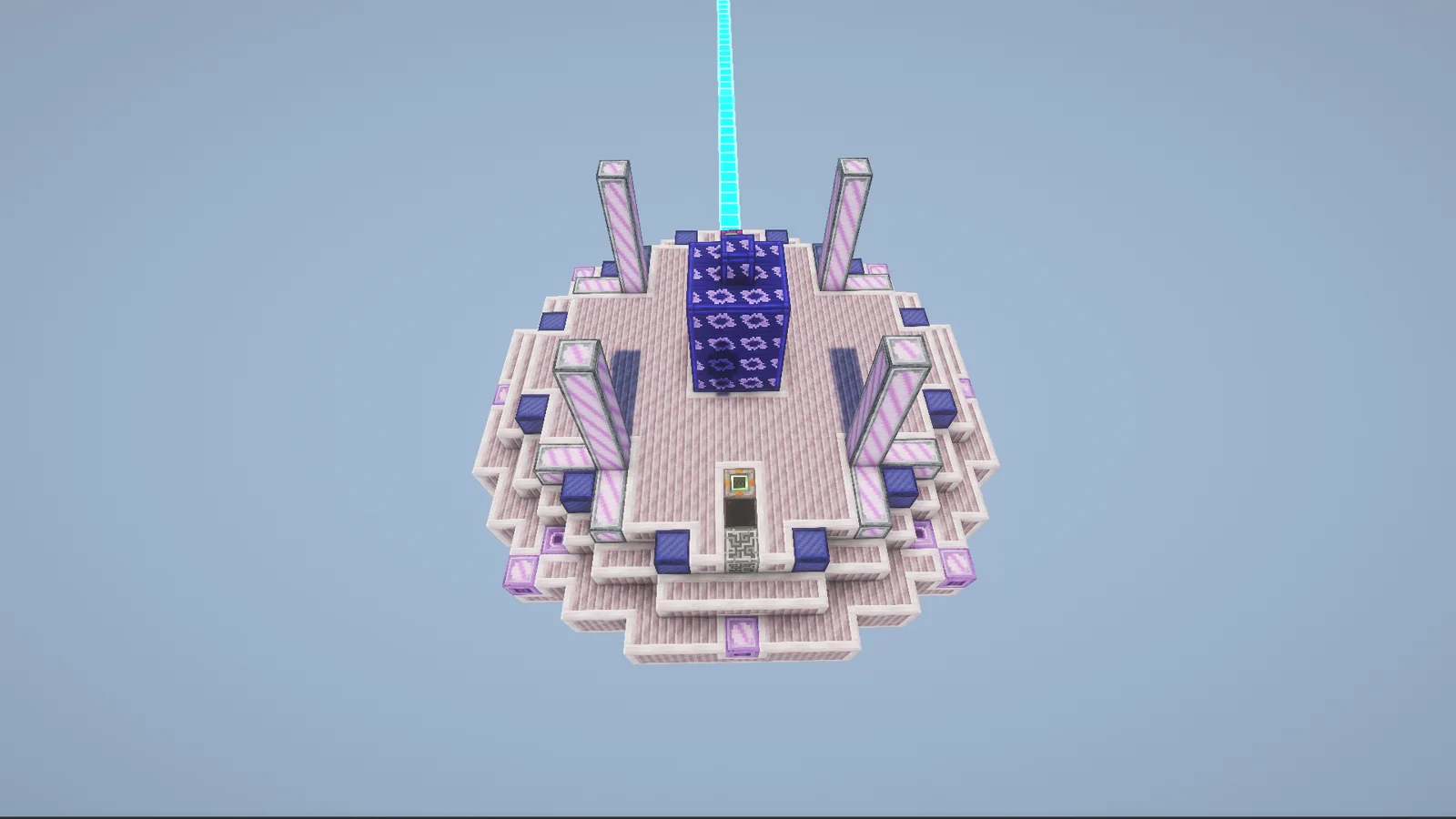
A wide, stepped, dome-like platform of pale pink casings with purple accents, striped pillars around its rim, a dark blue block stack behind the center, and the controller on the front face; a cyan beam rises from the top. The author did not state the dimensions.
Screenshots
Files
- SBB.litematic — Litematica schematic of the Stellar Breeding Base
Laser Friction Feeder (LFF)
Summary
Feeds the star its star feed, letting it digest it into stable matter that forms a rich and healthy star.
Mechanics
- The feeder adds to the star's initial mass.
- The materials the feeder uses depend on the type of star seed.
- It can be upgraded with Advanced Fusion Coils.
Structure
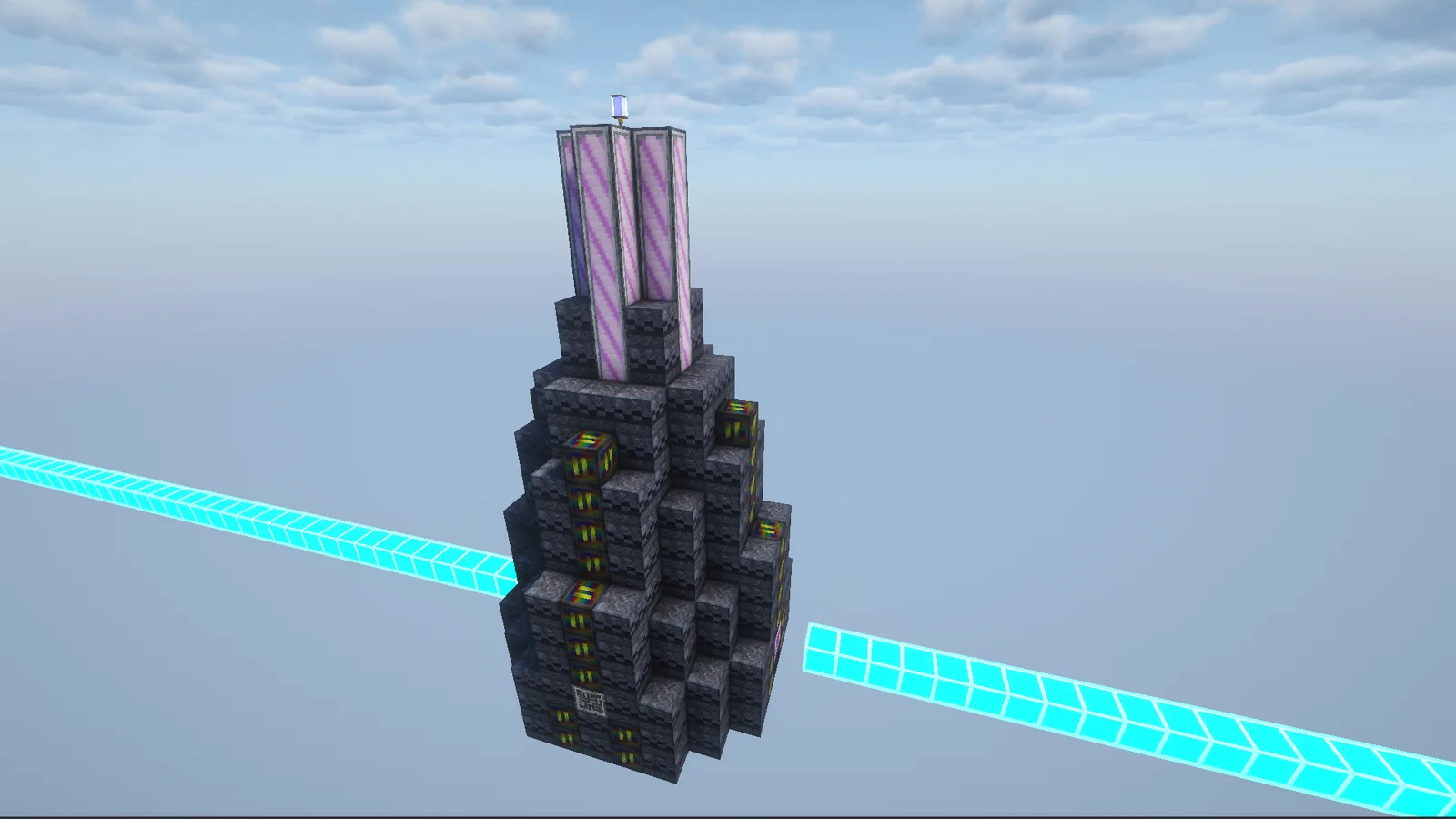
A tall, dark stepped tower studded with coil blocks, topped by a cluster of striped pillars and a small lantern. The author did not state the dimensions.
Screenshots
Files
- LFF.litematic — Litematica schematic of the Laser Friction Feeder
Stellar High-Power Laser Therapy (SHPLT)
Summary
Stimulates the star's digestive processes, reducing its total lifecycle and refining it into a better, stronger version of itself.
Mechanics
- Speeds up the very slow digesting process using energy.
Structure
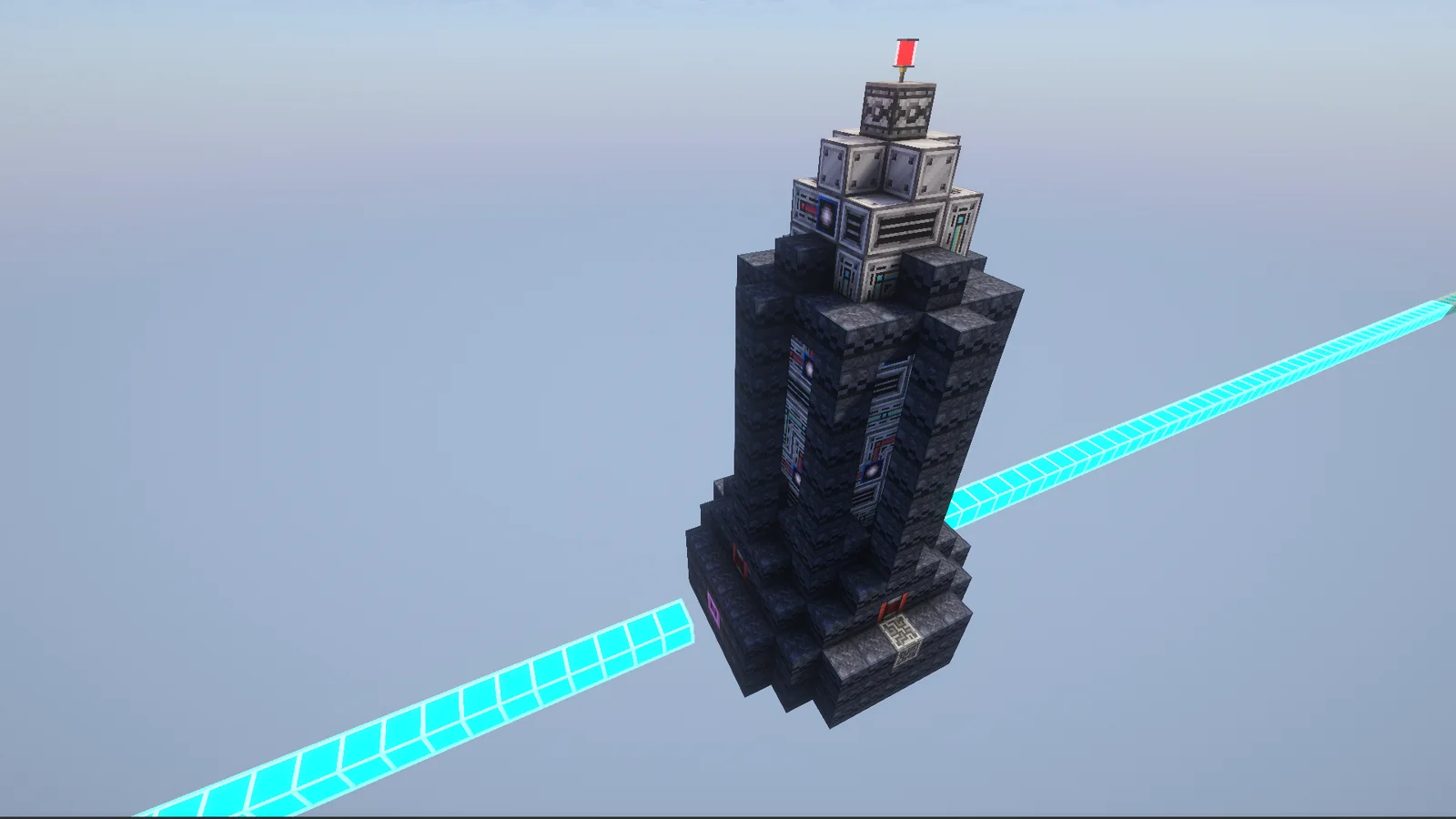
A dark tower with glowing panel blocks on its sides and a white machine-block assembly on top, capped by a small red marker. The author did not state the dimensions.
Screenshots
Files
- SHPLT.litematic — Litematica schematic of the Stellar High-Power Laser Therapy
Star Force Neutralizer (SFN)
Summary
Equalizes the various forces naturally present around stars, forcing a simulated equilibrium. Stable stars emit less force.
Mechanics
- Uses a cheaper universal stabilizing star feed to slowly add enough stability to counteract the passive drain. It does not add mass.
- Stabilizers need to be an even number, and each needs to face another stabilizer to start working.
- It can be upgraded with Advanced Fusion Coils.
Structure
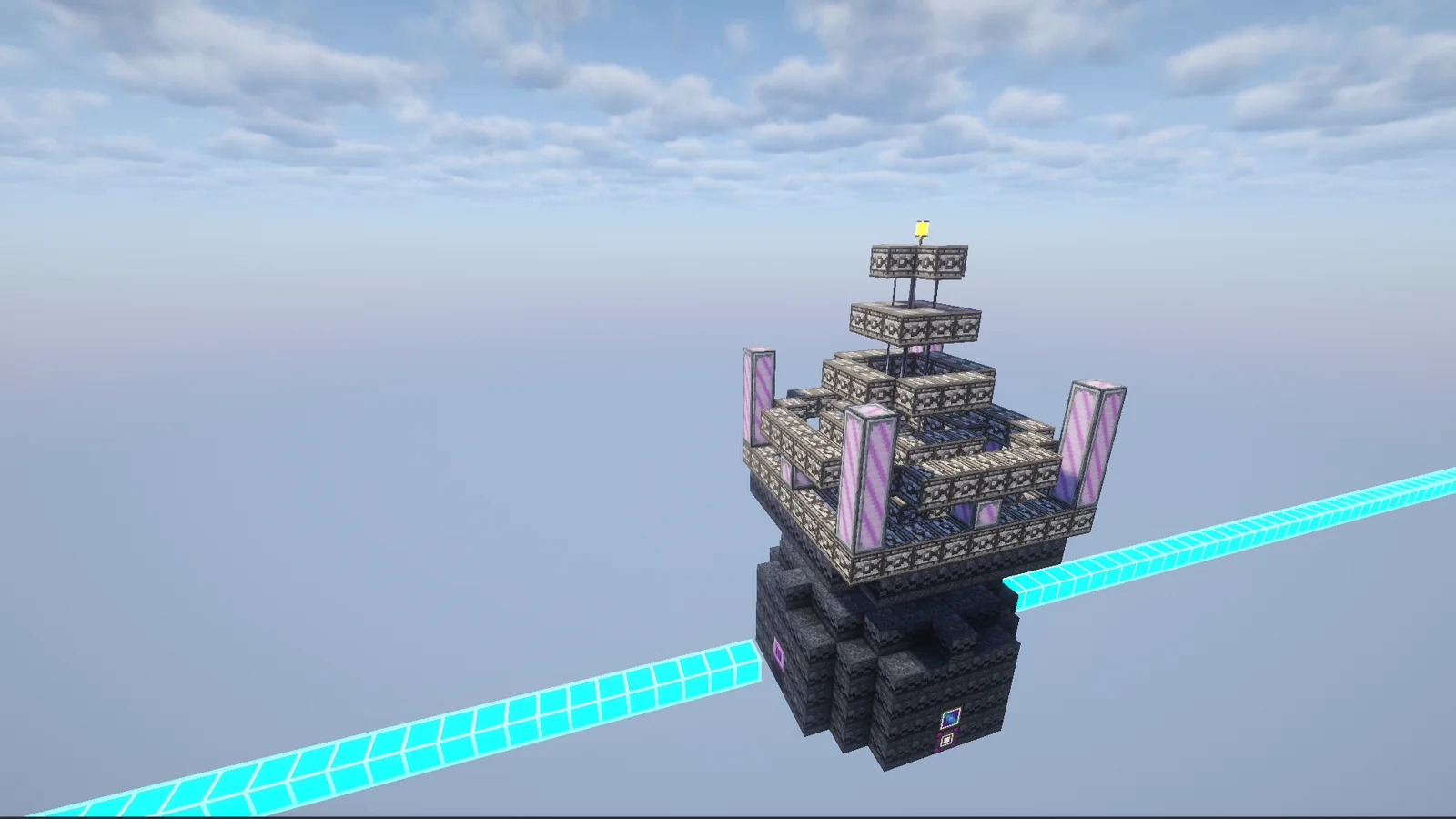
A dark base supporting several tiers of framed casing platforms that shrink toward the top, with striped pillars at the corners and a lantern on the peak. The author did not state the dimensions.
Screenshots
Files
- SFN.litematic — Litematica schematic of the Star Force Neutralizer
Stellar Wind Gleaning Array (SWGA)
Summary
Trims and collects the valuable excess mass off a star. Reckless usage can result in the death of the involved star.
Mechanics
- Turns mass into processable materials.
- If the star drops to a certain mass, decided by the tier, it collects the core. Higher tiers produce better cores.
Structure
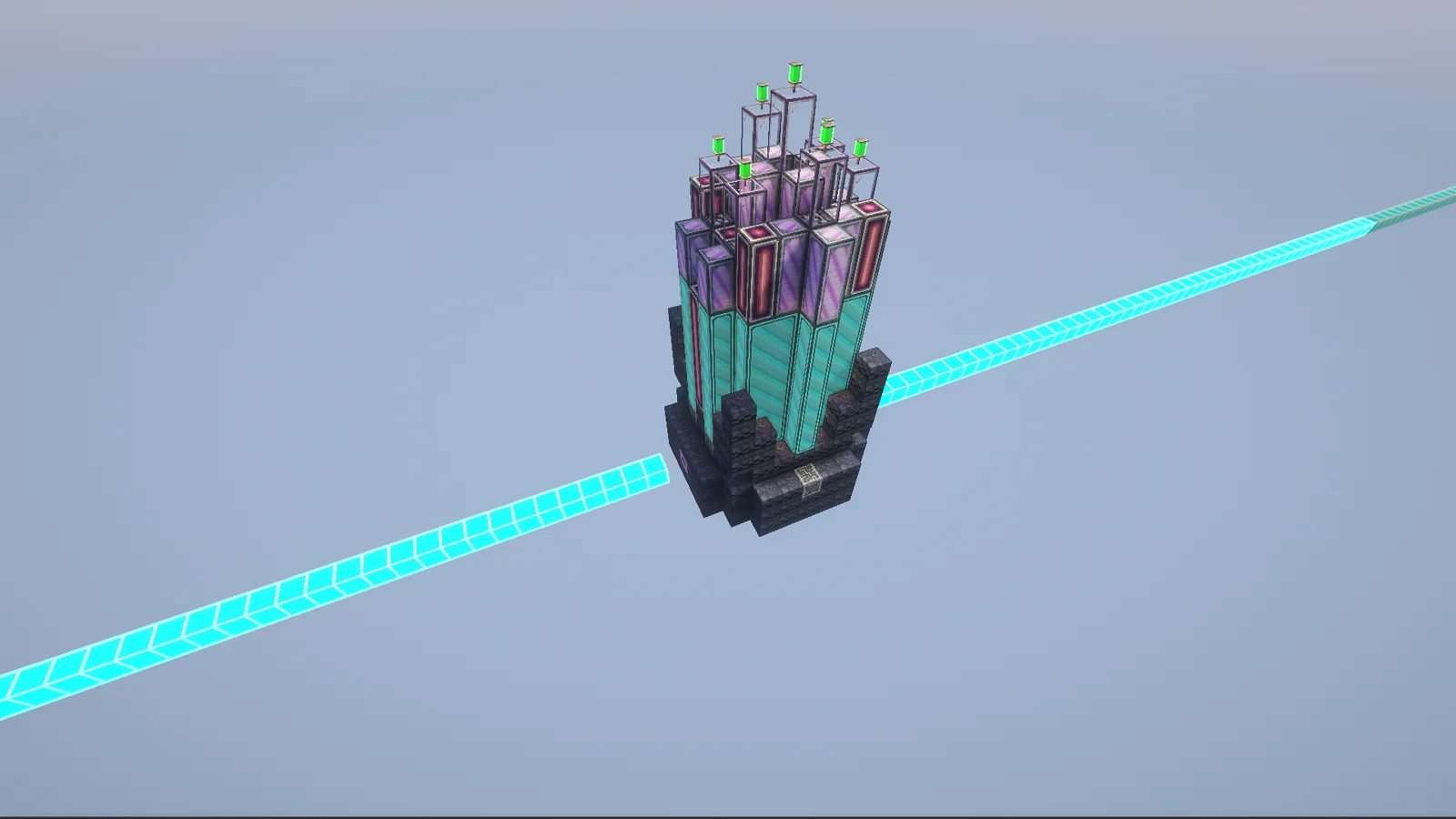
A dark base with a tall bundle of teal and purple glass columns rising from it, topped by framed blocks with green indicators. The author did not state the dimensions.
Screenshots
Files
- SWGA.litematic — Litematica schematic of the Stellar Wind Gleaning Array
Disrupting Celestial Sabotager (DCS)
Summary
An extreme failsafe measure that rushes to safely kill a rogue star as fast as possible. This inconsiderate method may affect the byproducts.
Mechanics
- Drains mass at the speed of 16 harvesters, but loses most of the byproducts and produces a low quality core that is used for lower tier applications.
Structure
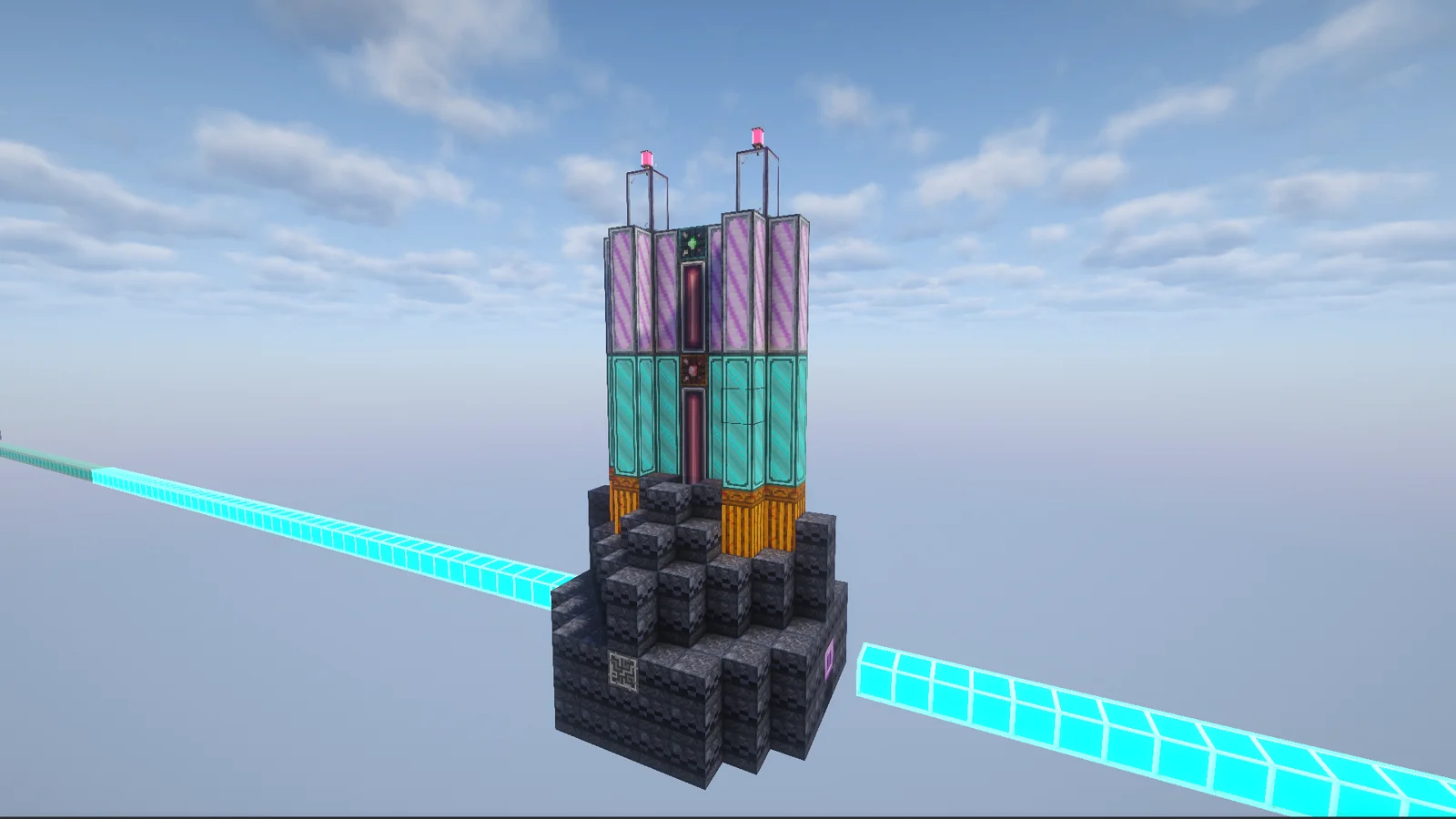
A dark stepped base with a tall tower of teal and purple glass around a red central column, with two pink lanterns on top. The author did not state the dimensions.
Screenshots
Files
- DCS.litematic — Litematica schematic of the Disrupting Celestial Sabotager
Miniature Dyson Ring Installer (MDRI)
Summary
Deploys dyson rings capable of harvesting the mystical energies around living stars, converting them into large amounts of power.
Mechanics
- Higher rank stars produce more energy.
- It moves the dyson ring into a locked slot and periodically reduces its durability. When the durability reaches 0 it outputs a broken ring that cannot be fixed and has to be salvaged.
Structure
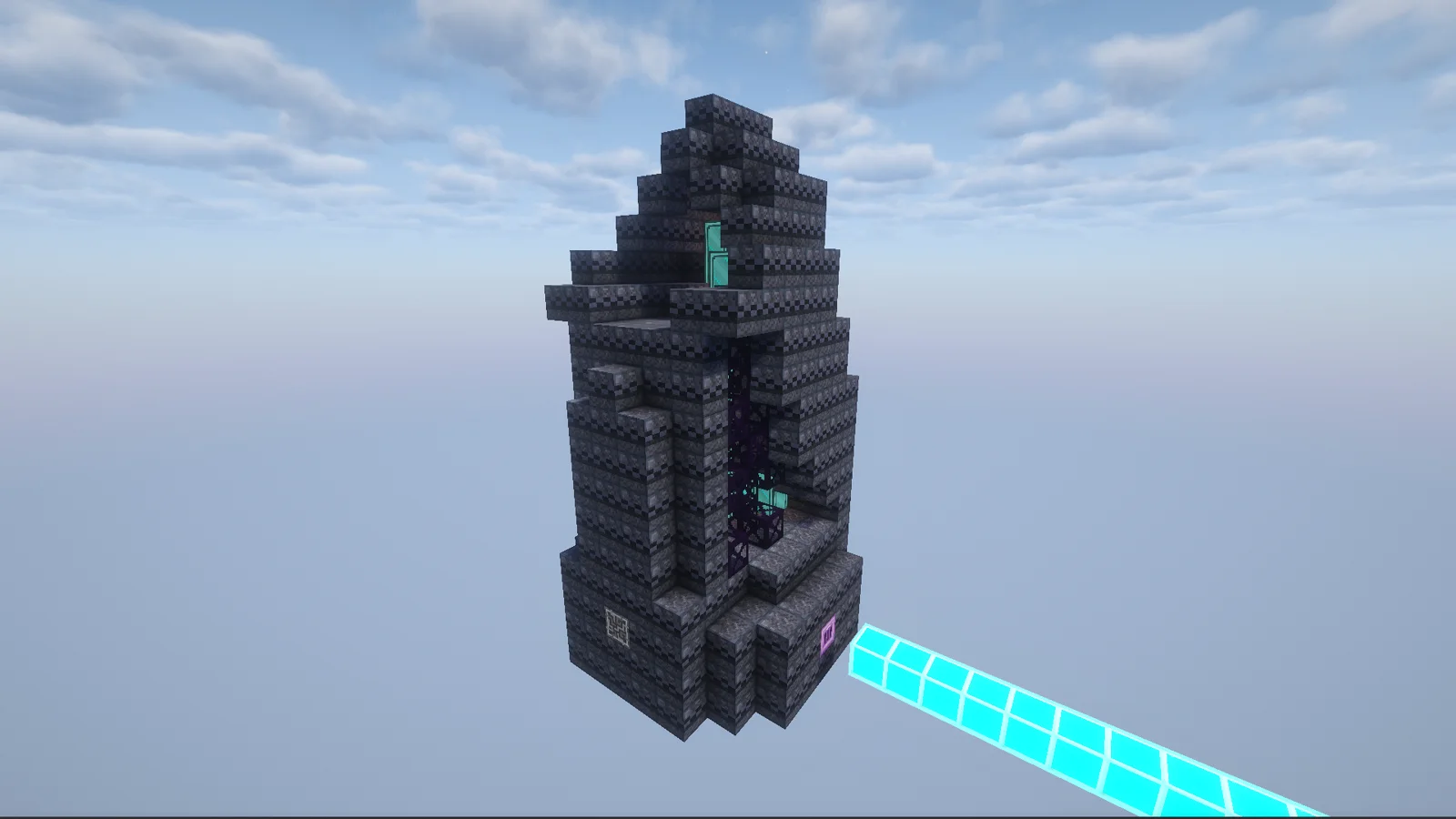
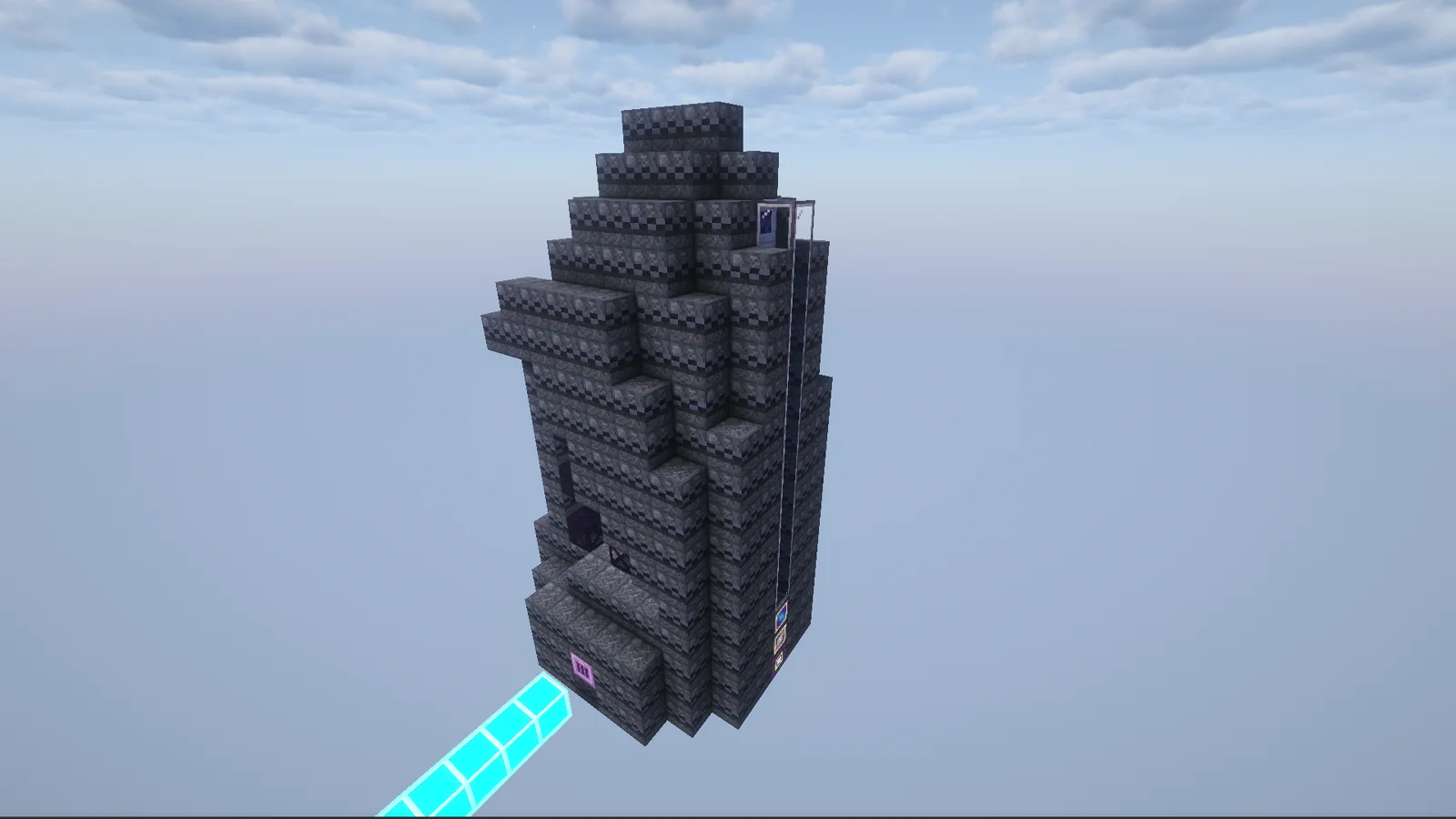
A tall, dark stepped tower with an open cavity in its front that holds the ring, and a vertical glass channel running up the back. The author did not state the dimensions.
Screenshots
Files
- MDRI.litematic — Litematica schematic of the Miniature Dyson Ring Installer
Structure
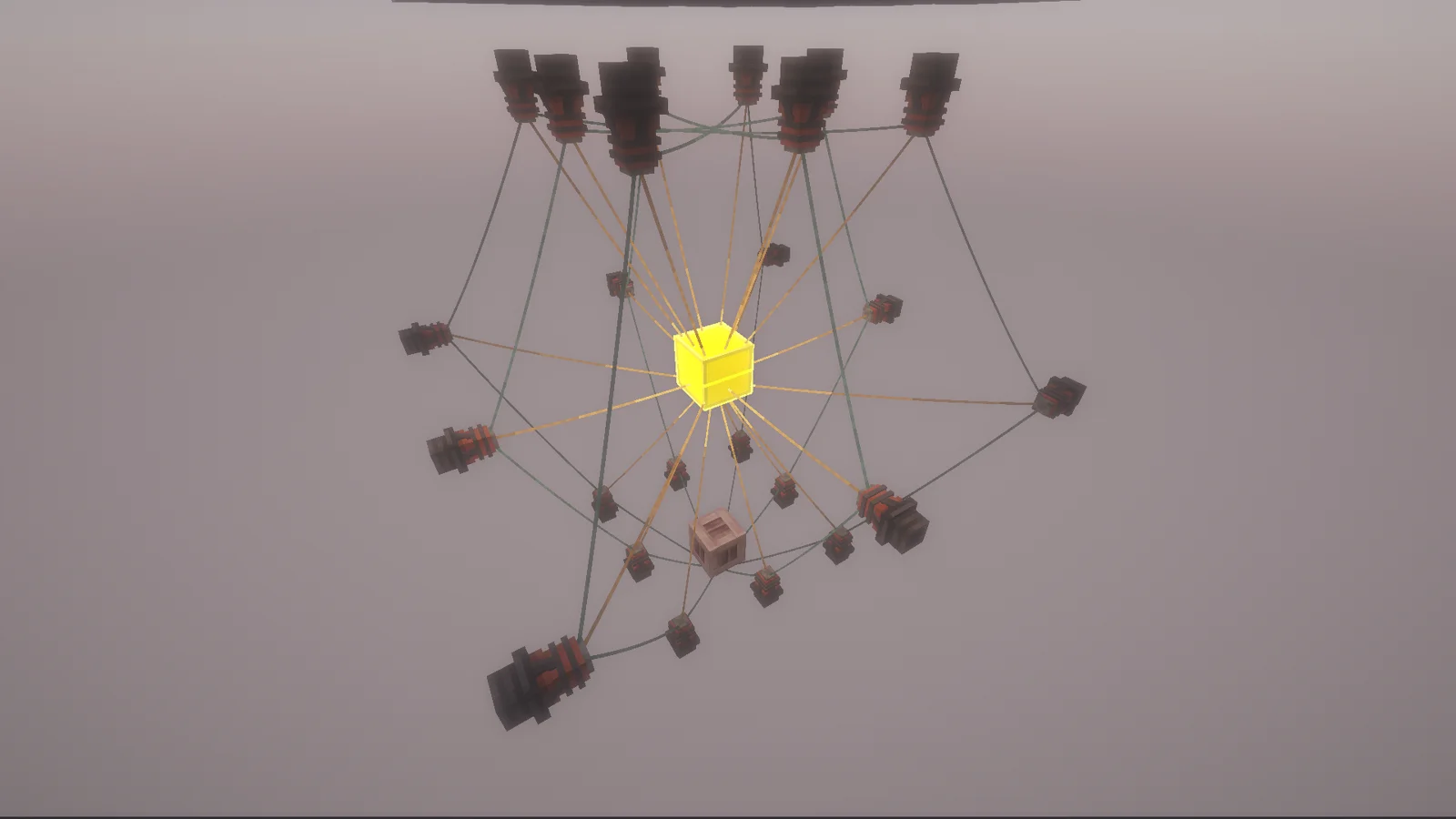
Seven separate builds, mostly dark stepped towers with glass, coil, or framed upper sections, plus the wide pale-pink base. In the author's screenshots each module sits on a cyan beam line. The author also posted an example of the intended render: a glowing star at the center with a web of lines running out to the surrounding nodes. Per-structure screenshots are in the sections above.
Screenshots
Files
- general-information.txt — the author's lifecycle, rank, and block-replacement notes
- SBB.litematic — Litematica schematic of the Stellar Breeding Base
- LFF.litematic — Litematica schematic of the Laser Friction Feeder
- SHPLT.litematic — Litematica schematic of the Stellar High-Power Laser Therapy
- SFN.litematic — Litematica schematic of the Star Force Neutralizer
- SWGA.litematic — Litematica schematic of the Stellar Wind Gleaning Array
- DCS.litematic — Litematica schematic of the Disrupting Celestial Sabotager
- MDRI.litematic — Litematica schematic of the Miniature Dyson Ring Installer
Notes from the thread
- Asked whether the blocks in the modules are ASG ring blocks, the author clarified they are DSG ring blocks, used as a stand-in for a new casing.
- The author also linked a short animation clip; thread members pointed out it is a dev-team sneak peek of an upcoming update rather than the author's own work, which matches the "and the dev team" credit in the post.