Layered Universal Circuit Machines
Submitted by: Joyal (@j.yal) · Multiblock Design Contest, September 2026
| Target tier | |
| Role | Multi-structure family — three tiered bulk circuit assemblers |
| Schematic | sequenced-chip-assembly-chamber.nbt, gage-freeflow-welding-complex.nbt, syntactic-circuitries-reconstructive-alignment-matrix.nbt |
| Original post | Layered Universal Circuit Machines (names below) |
Summary
A family of three "layered" circuit machines that replace the Draconic Circuit Assembler's Draco Bulk Circuiter mode and spread it across the later gates: the Sequenced Chip Assembly Chamber (SCAC) at
Mechanics
Shared by all three machines:
- Recipes that use these machines have their inputs, outputs, and duration multiplied by 24, to accommodate the latency of layered automation.
- Later tiers may provide additional bonuses, but require increasingly higher-tiered soldering alloy to operate.
- All three require absolute stabilisation. Tier 2 and tier 3 additionally require cleanroom and sterile cleanroom status respectively, to keep the environment pure enough to run; this means the higher tiers carry two "maintenance" hatches. If the required status is missing, recipe outputs are reduced to tier-1 circuit(s) and soldering alloy consumption is multiplied by 4^tier.
- Structure voids in the schematics need not strictly be air.
Per-tier restrictions and solder, as clarified by the author from the world download:
| Machine | Tier | Circuit tier | Soldering alloy | Solder cost | Extra |
|---|---|---|---|---|---|
| SCAC | 1 | regular | full | — | |
| GFWC | 2 | ITLC | 1/2 | — | |
| SCRAM | 3 | naquadated | 1/4 | +50% yield (proposed; the author leaves the exact bonus to the devs) |
Sequenced Chip Assembly Chamber (SCAC)
Summary
Tier 1 of the family, targeted at
Structure
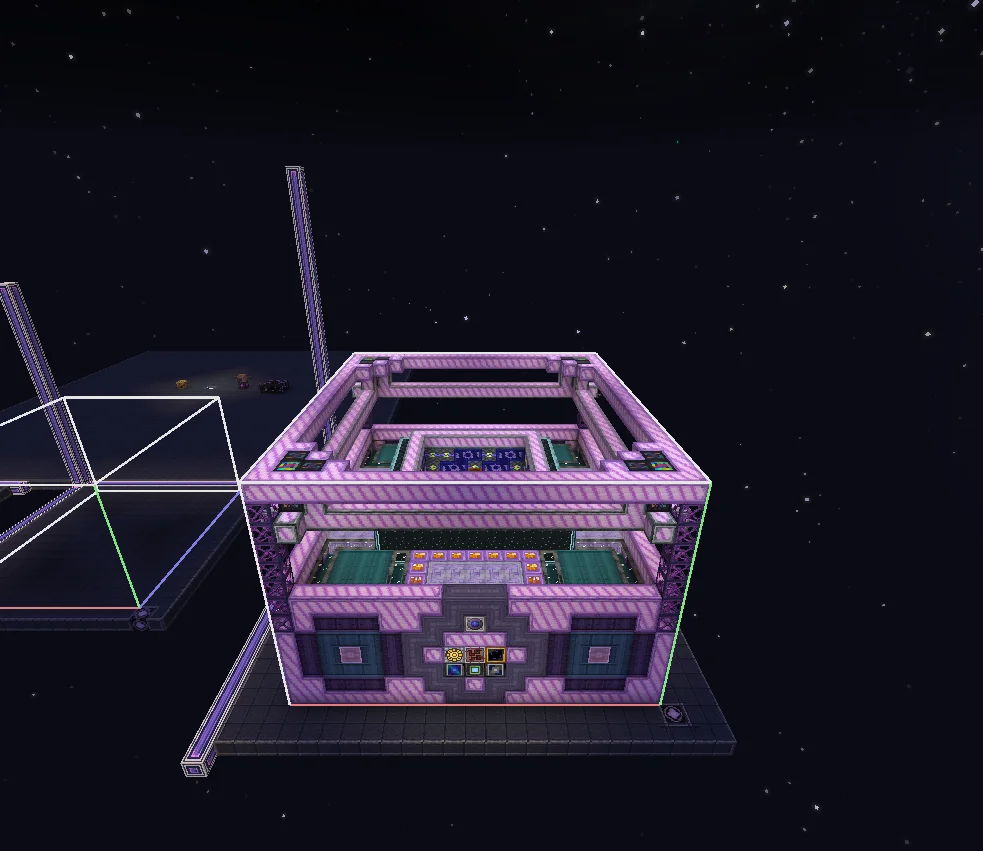
A pink Palladium Substation shell with Pallaridium engine, turbine, and pipe casings, Fusion Glass, Assembly Line Units, and a superconducting coil in the interior; the controller sits centered on the front wall. The structure dump spans 11 × 5 × 9 blocks.
Screenshots
Files
- sequenced-chip-assembly-chamber.nbt — structure NBT
Gage Freeflow Welding Complex (GFWC)
Summary
Tier 2 of the family, targeted at
Structure
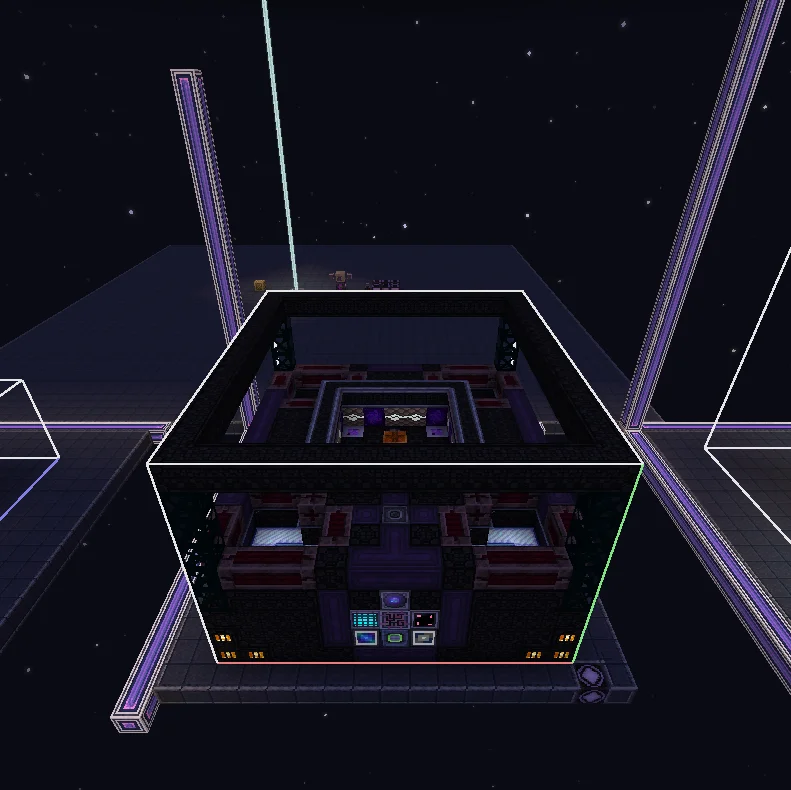
A dark Enriched Naquadah machine-casing shell with Atomic Casings, Tritanium Coil Blocks, Tritanic Blasting Casings, and Reinforced Fusion Glass, with a Cleaning Maintenance Hatch and an Auxiliary Fusion Coil Mk1. The structure dump spans 15 × 9 × 13 blocks.
Screenshots
Files
- gage-freeflow-welding-complex.nbt — structure NBT
Syntactic Circuitries: Reconstructive Alignment Matrix (SCRAM)
Summary
Tier 3 of the family, targeted at
Structure
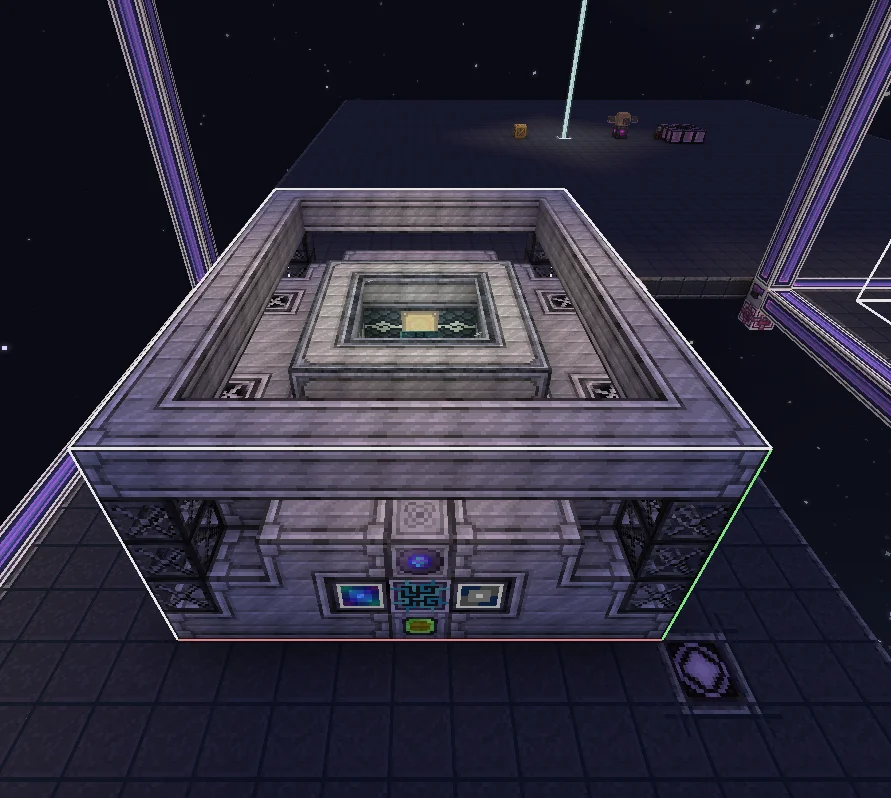
A large Nyanium machine-casing structure with Atomic Convergence, Stellarium, Draneko, and Draco Ware casings, Runic Computer Casings, an Advanced Fusion Coil, eight Auxiliary Fusion Coil Mk2, Absolute Annihilators, and a Sterile Cleaning Maintenance Hatch. The author gives its size as 21 × 19 × 13, which was permitted by UltraPuPower1 (@ultrapupower1).
Screenshots
Files
- syntactic-circuitries-reconstructive-alignment-matrix.nbt — structure NBT
Files
- sequenced-chip-assembly-chamber.nbt — SCAC structure NBT
- gage-freeflow-welding-complex.nbt — GFWC structure NBT
- syntactic-circuitries-reconstructive-alignment-matrix.nbt — SCRAM structure NBT
- structures.txt — text dump of all three structures (block state lists and required block counts)
- multi-showcase.zip — world download with all three machines built
Notes from the thread
- Thread feedback pointed out that the Absolute Stabilization Module is only unlocked at
UHV , which would softlock theZPM tier 1 machine. The author proposed using a Cleaning Maintenance Hatch instead for tier 1; a later reply noted that the Cleaning Hatch is stillUV . The author did not post a resolved version. - The SCRAM's 21 × 19 × 13 footprint was approved by UltraPuPower1 (@ultrapupower1), per the author.