Draconic Life Breeding Chamber (DLBC)
Submitted by: Sonix_790 (@sonix_790) · Multiblock Design Contest, September 2026
| Target tier | |
| Role | Resource generation — Draconic cell production |
| Schematic | dlbc.nbt |
| Original post | Draconic Life Breeding Chamber (D.L.B.C) |
Summary
A proposed late-game multiblock that offers a more convenient way of obtaining Draconic cells, meant to ease the grind toward the DSG and beyond. It grows the cells on a new growth medium influenced by the environment of the abyss. The convenience comes at a cost: the structure must maintain a specific internal atmosphere, it draws more power (forced overclock to
Mechanics
- Atmosphere upkeep: the chamber consumes some kind of void fluid to prime its internal atmosphere first, then consumes a smaller amount to maintain it. The author compares this to the heat mechanic of the Hell Forge or the saturation mechanic of the Abyssal Isolation Chamber.
- Power: recipes are force-overclocked to
UXV . - Time: the recipe is intentionally long, as it amounts to duplicating Draconic cells.
- Threading: the author includes threading as a way to accelerate the very long recipe and to expand the machine's options.
- Draco-peptide production (proposed): with the same idea, the machine could double as a Draco-peptid producer, based on a possibly expensive craft of a self-replicating strain.
- The author notes they are not familiar with progression at this point and asks to be told if the design is game-breaking.
Structure
An egg-shaped build of dark purple blocks with a band of purple-striped casings and glass windows around the middle, a central pillar inside, and the controller on one face of the casing band. The author did not state the dimensions.
Screenshots
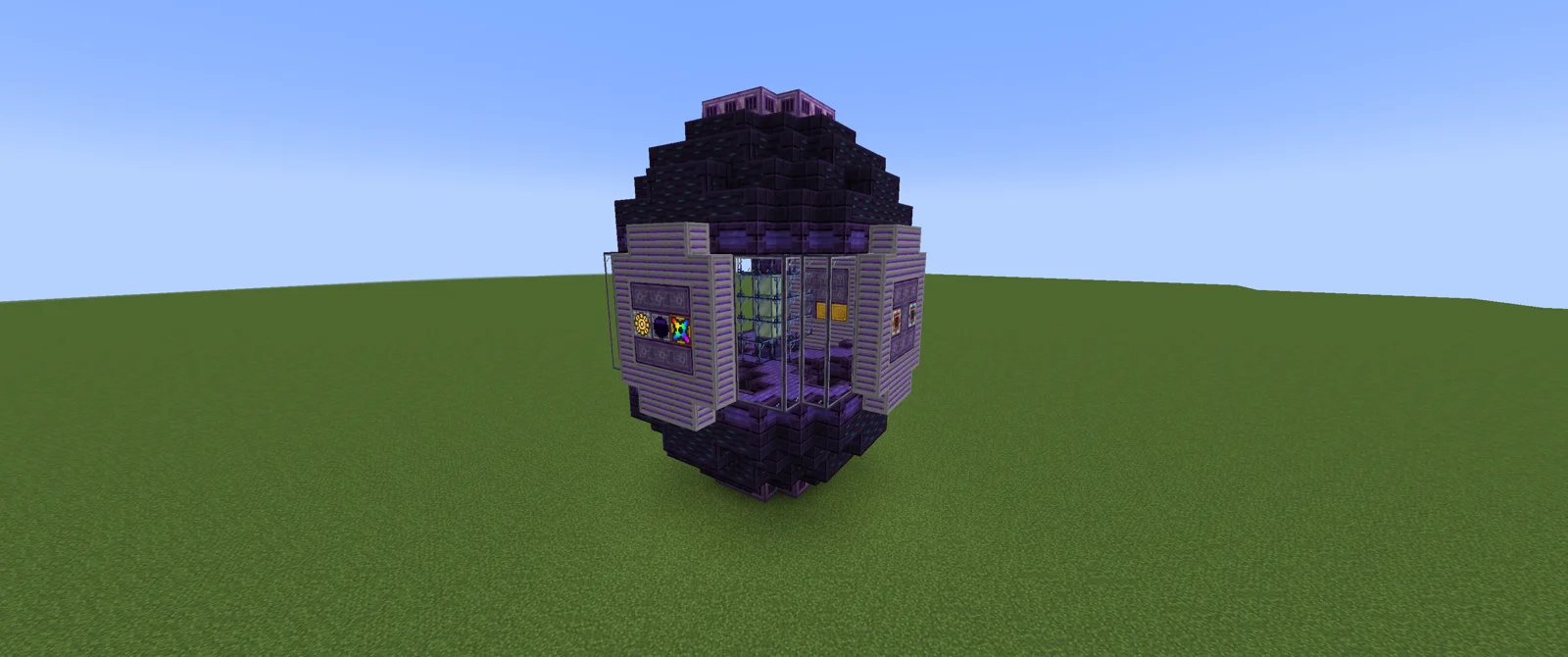
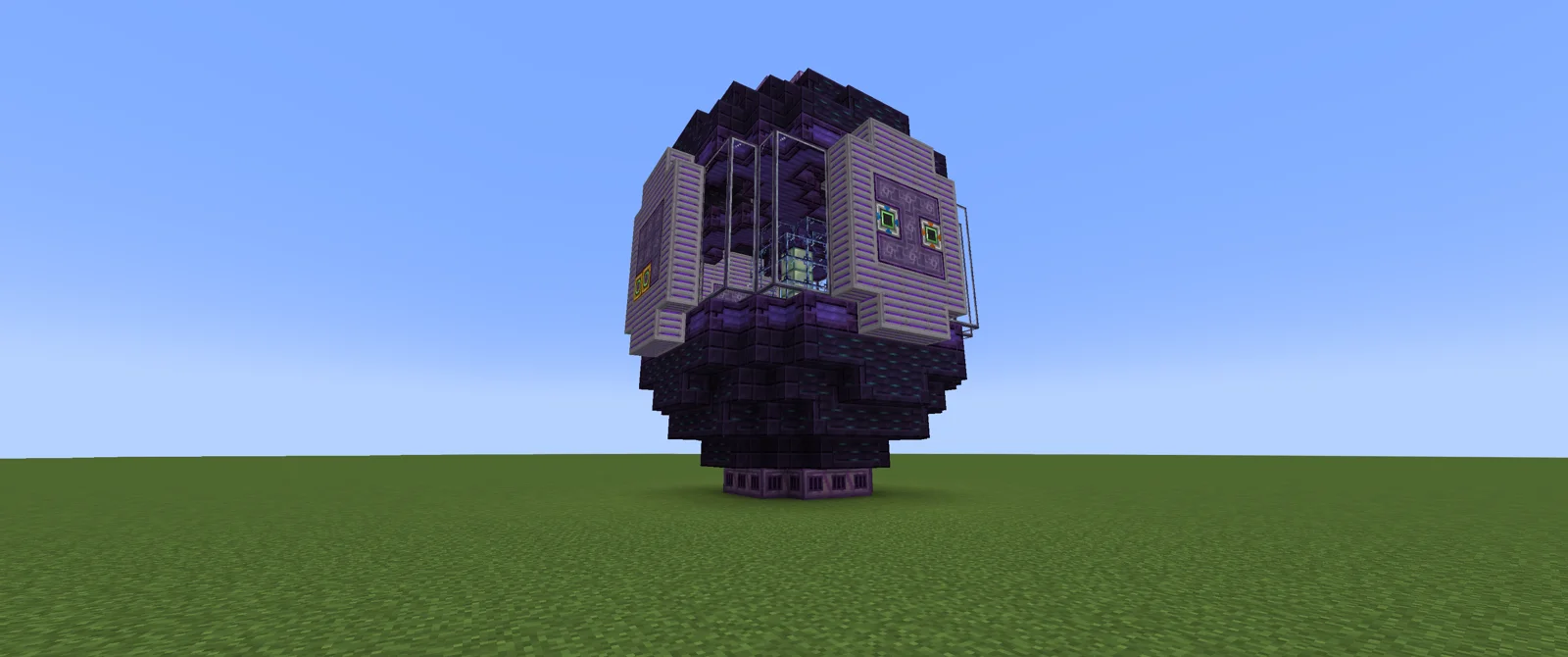
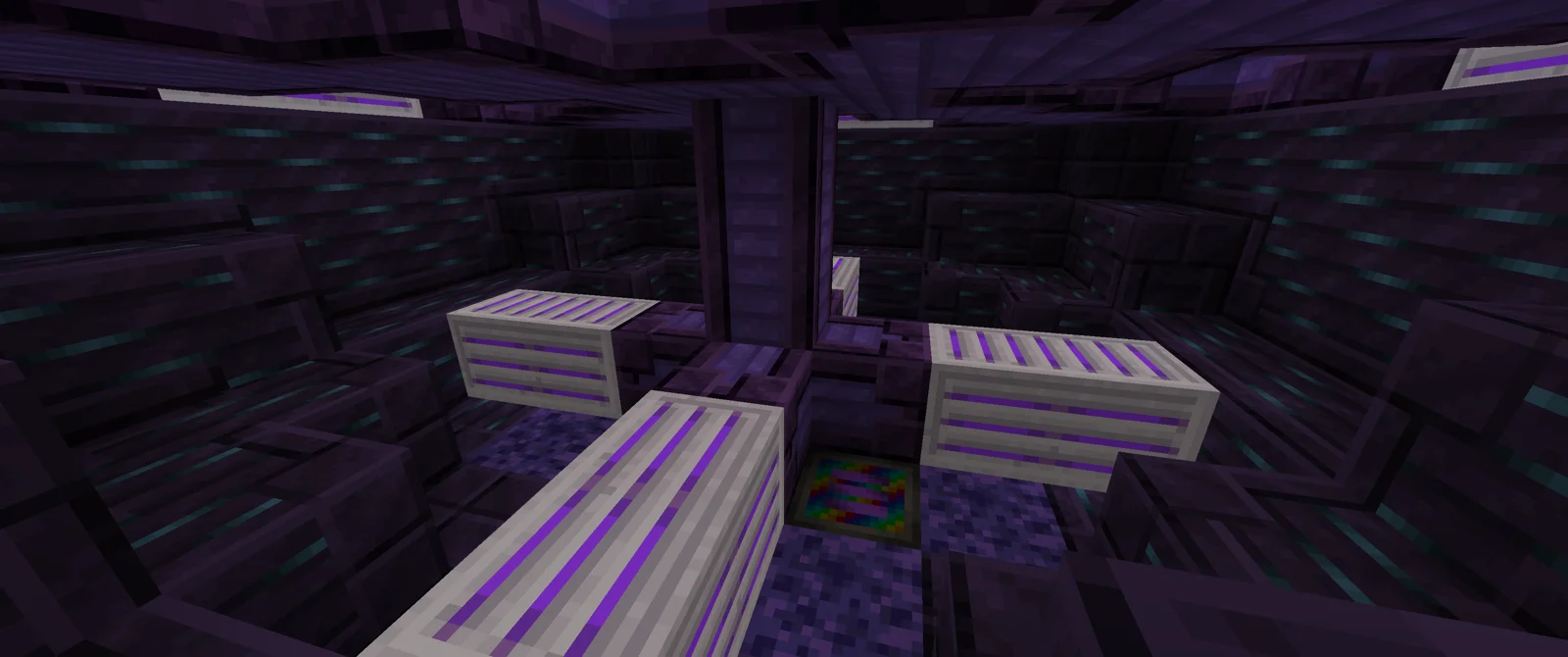
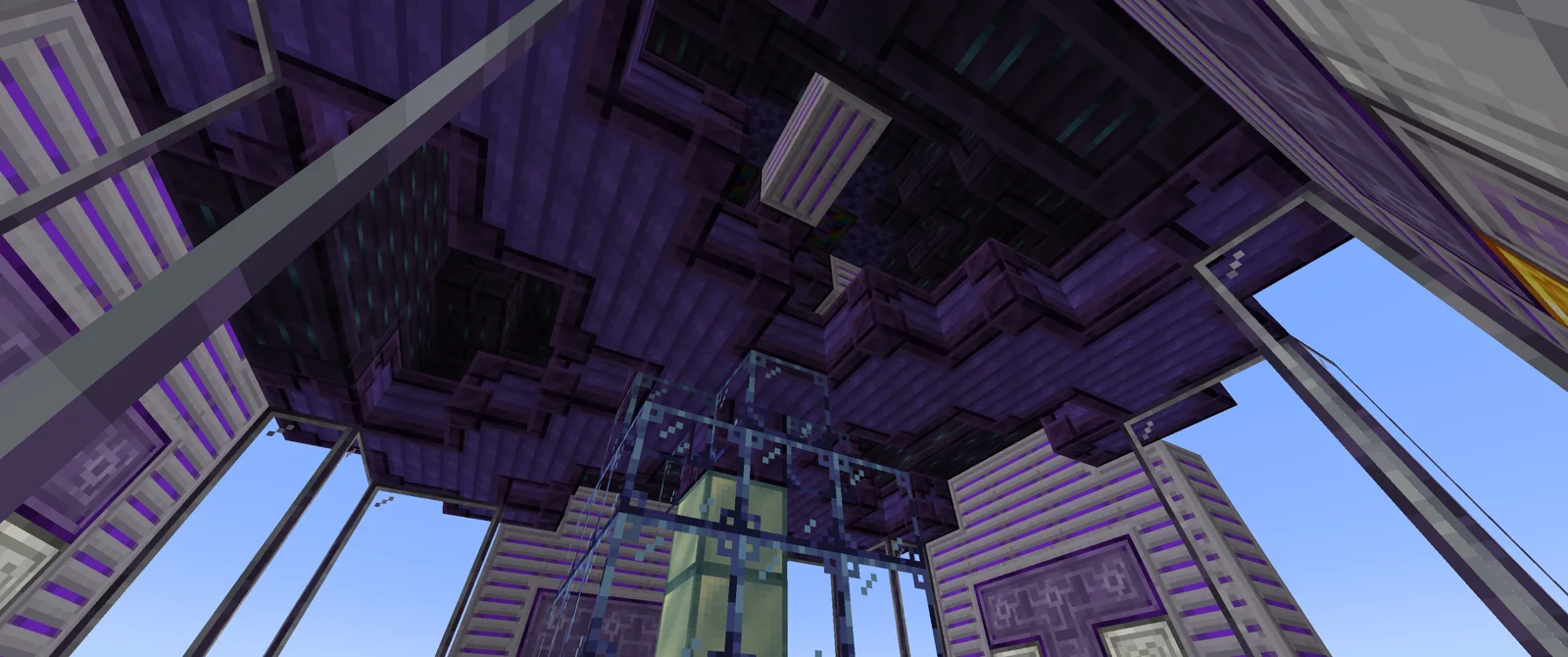
Files
- dlbc.nbt — structure block (NBT) schematic
Notes from the thread
- The author originally wanted to call the structure "EGG"; the thread suggested alternative names, but the submission keeps "Draconic Life Breeding Chamber".
- Asked whether the machine could make dragons, the author suggested a recipe for incubating an embryo could be added.